
Working Close to the Ground
Working with wild clay at Township 10

Over the past few years many of you joined my mailing list at markets or through my website to hear about where to find my pottery. Recently I’ve been wanting to share a little more from inside the studio—the materials, experiments, and observations that shape the work. I’ve moved my newsletter over to Substack, where I’ll have a living record of this writing. I’ll still share short notes about upcoming events and shop updates, but my hope is to bring a little more heart and thought into your inbox.
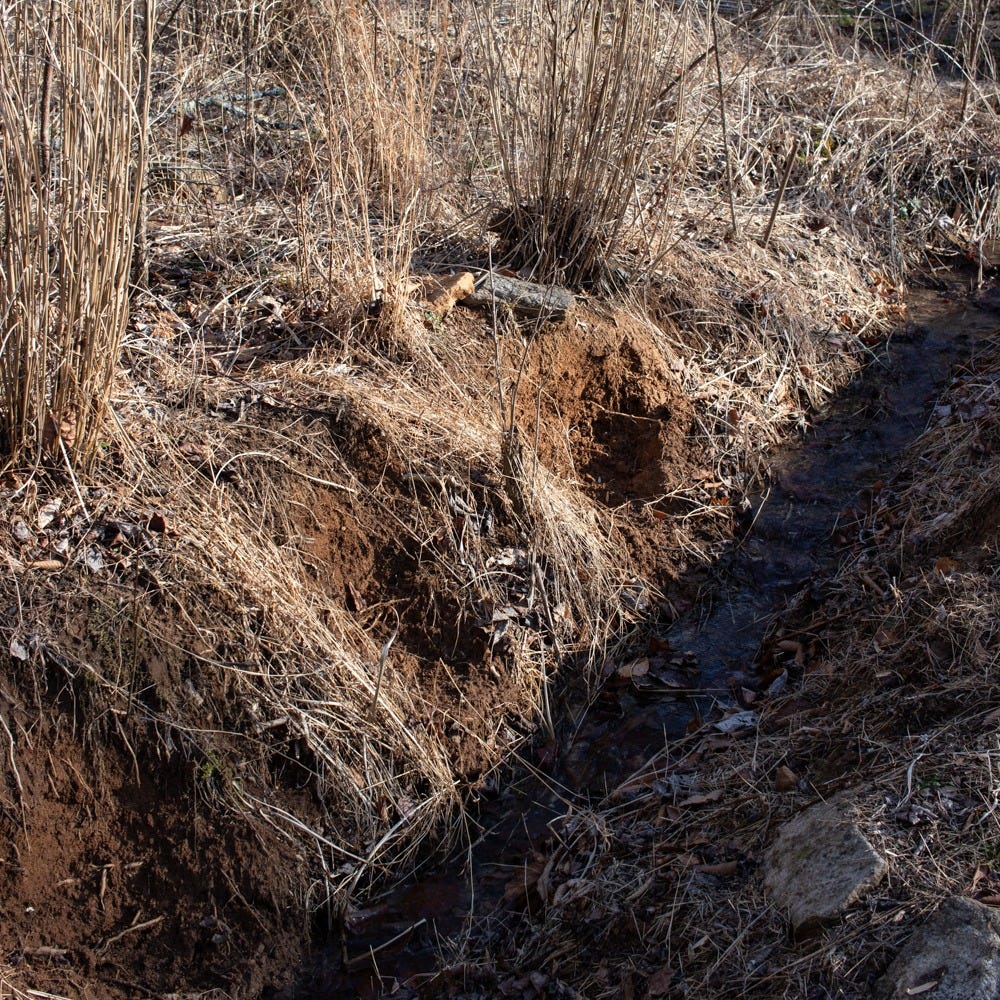
The clay here is everywhere.
It’s the tan packed earth under the kiln shed. It shows up in the tire tracks when the tractor crosses the grass. I find it when I slip my shovel into the perennial beds, digging plants and moving rocks.
I chose to collect my buckets of clay at the top of the property, where a small creek cuts through the earth among tall clumps of miscanthus grass and spicebush. This time of year the spicebush branches glow with tiny green flowers—one of my favorite plants to gather for arrangements, lime green pops among the yellows of daffodils and forsythia.
It’s been three weeks since I arrived for my residency at Township 10, a beautiful site nestled in the hills of Madison County, North Carolina. Since my last residency here in 2024, I’ve stayed on as the gardener—designing new ecological flower beds by the pond, creating a fire pit garden space, growing vegetables for residents, and slowly getting to know this property and the people who pass through it.
During my time here I wanted to slow down my practice and work more closely to the ground. My residency goal has been to make work entirely from clay and materials gathered on site.
On my first day in the studio I did nothing to the clay I’d dug except add enough water to make it workable between my hands. That evening I sat at my table with the freshly dug earth, pulling rocks from it one by one. In this immediate state it was difficult to work with, cracking along the edges and needing to be coaxed into holding a form. Still, I wanted to lean into the limitations of the material and see what shapes it might take under my hands.
Over the next week I processed another batch of the same clay using the method I use at my home studio, where I also dig clay from the creek behind my house. I added water to the buckets of earth, mixed it with a drill and paddle attachment, screened the slurry through a window screen, and poured it into drying racks.
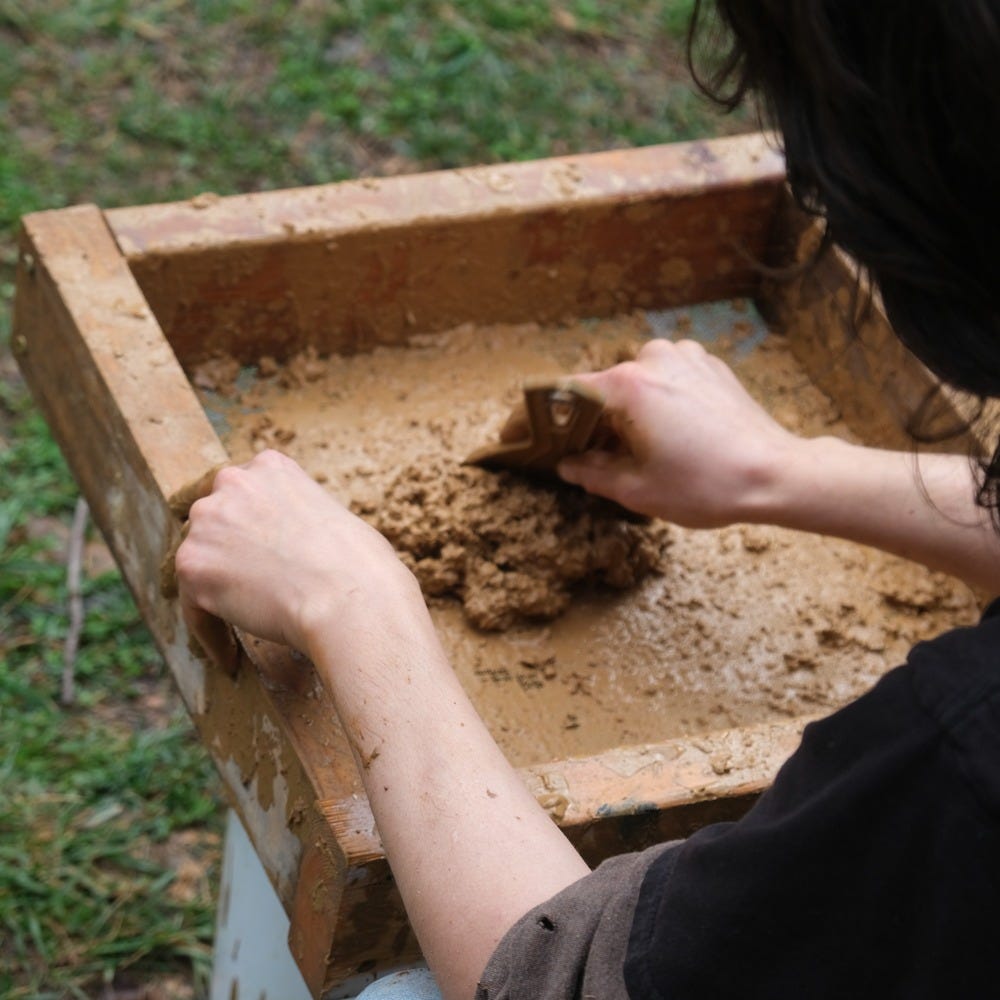
At home I’ve built a stack of racks for processing clay. Here—thanks to a tip from lead resident Sam Harley—I discovered an old rack under the barn, left over from the early days when East Fork Pottery began its operations on this property.
By the second week the screened clay had dried enough to work with. I’ve been surprised to find that it throws quite well. Returning to the wheel after some time away, and after spending so long refining this clay, I felt a deep sense of curiosity and play in the studio again.
As before, the clay makes its limits known. It doesn’t like being too wet, or too dry. Plates crack along the rims. Some pots collapse. But working with the clay as it is means adapting my making to what it allows. I’ve found that these constraints are strangely freeing—when certain possibilities fall away, the path forward becomes clearer.
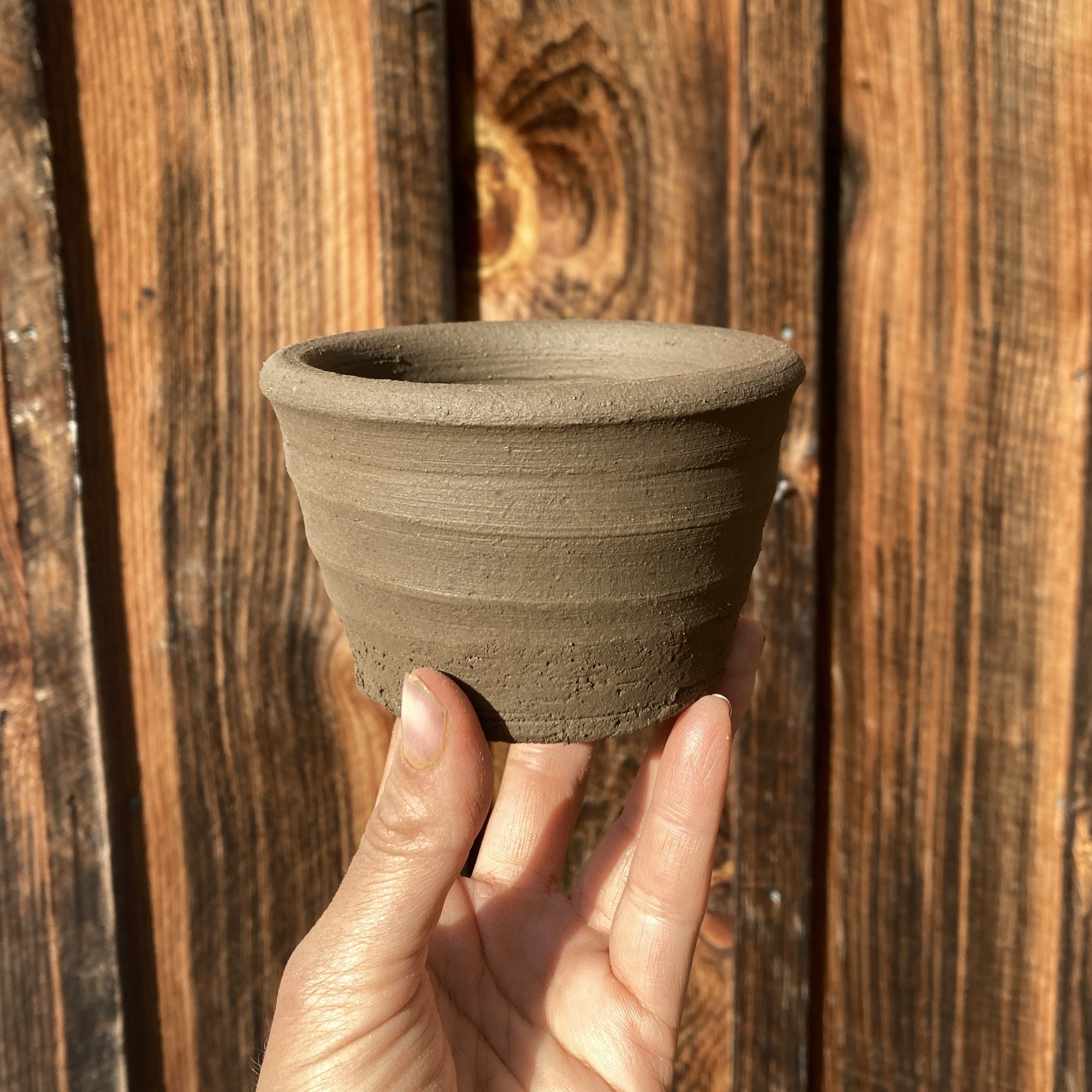
In my handbuilt work I’m learning to embrace the cracks. I press the stones I had screened out back into wet slabs. A new body of work has begun to emerge, and I’m excited about it.
I’ve been unloading pots from the bisque kiln today, and I’m loving this clay—how orange it fires in the bisque, how it deepens to a brick red at cone 6/8.
Much of the residency has also been about slowing down and watching spring gradually unfold here. Wood frogs quack in the pond, where parts of the water are dark and dancey with little tadpoles. I sit on the porch with Sam, listening to birds cast their songs across the field, trying to recognize them by their calls. Between studio sessions I’ve been tending compost piles, preparing garden beds, and watching spring unfurl.
Marjorie Dial (my friend, fellow resident this session, and the owner of the property) kept expressing her surprise that this clay was here all along. I think we often forget how abundant clay is, especially in the piedmont and mountains of the East Coast— clay is not so much a precious resource that you need to go out and look for so much as it is the ground itself. Dig a shovel anywhere on this property and you will hit clay. The key is just getting to know which clay has what properties, and you find this out by being curious about it, gathering it, working with it in your hands, putting it to fire. Working with clay here in this way reminds me that materials are all around us, and that many of the things we need in this life can be made by hand, gathered out in the world, if we’re willing to put in the time and work.
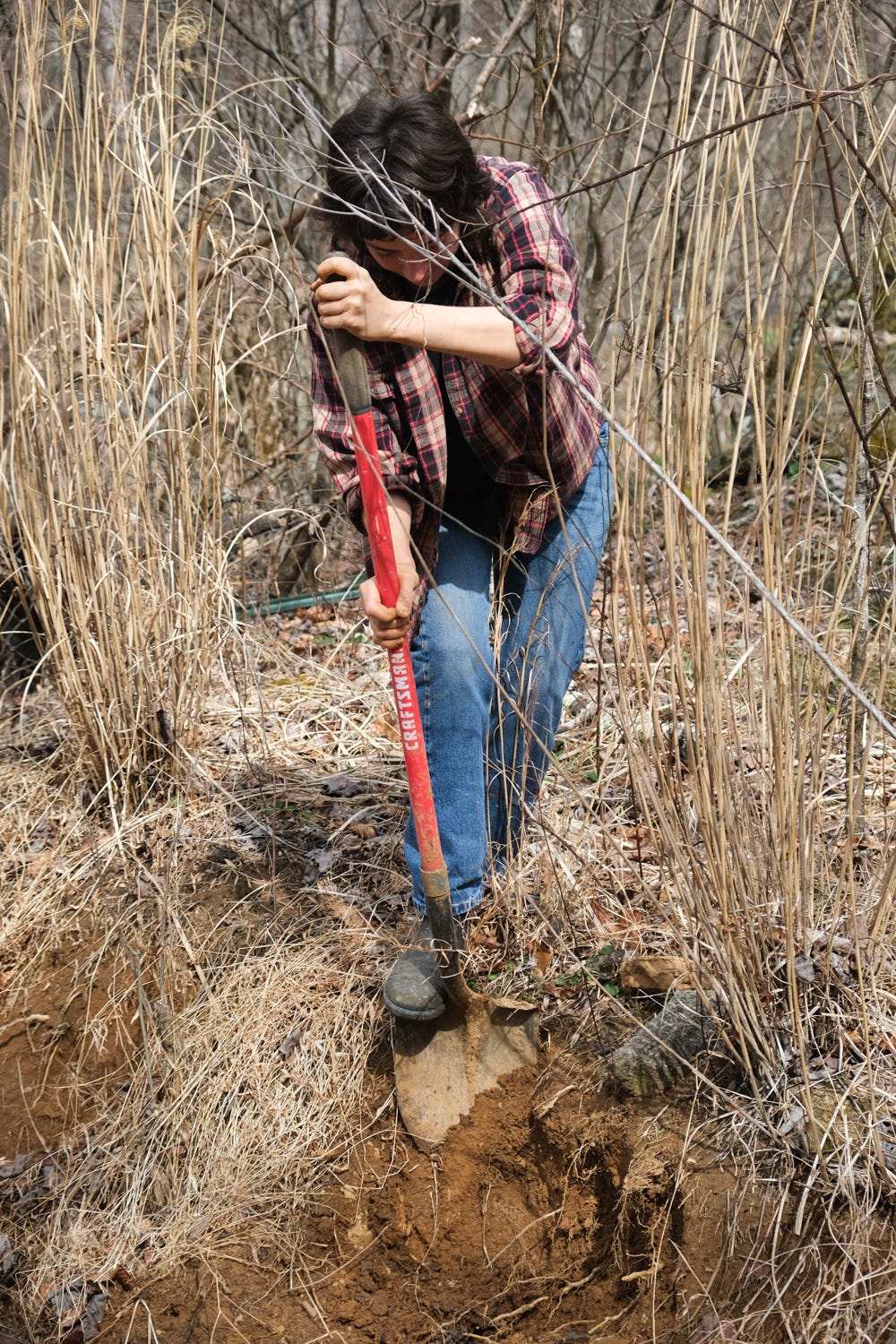
During this residency I’m no longer asking myself whether time spent outside at the edge of the woods with a shovel is time lost making pots. Instead, I’ve begun to see putting my shovel in the ground as a necessary step in creating the ceramic work I want to make right now. Limiting myself to this place while making gives new meaning to my work, and impresses the fact that often everything we need is already plainly in front of us if we take the time to notice it.
And I’m enjoying what I’m noticing– the smell of tulip poplar roots as I dig the earth; the warmth of the sun on my skin, the breeze across my face; my ears full of birdsong and the sound of my own footsteps in the leaves as I breathe hard and work the shovel into the earth.
My residency here ends next week. I’m looking forward to bringing these new pots and material knowledge back to my home / studio, and continuing my conversation with clay there as I start a new making cycle in my new space.
-Mel
PS— My studio will be a stop on the Toe River Arts Tour, June 5–7. If you’re local to WNC you can come check out the blue-gray vein of clay in my backyard in person and see what’s going on in the studio and garden. I’ll be joined by guest artists Sam Harley (currently here with me at Township 10) and Lewis Denver, a fellow local materials enthusiast.
What a gorgeous piece of writing. I hope there is a book in the future. Your awareness of the connections between elements in your world even enfolds the reader into the process.