
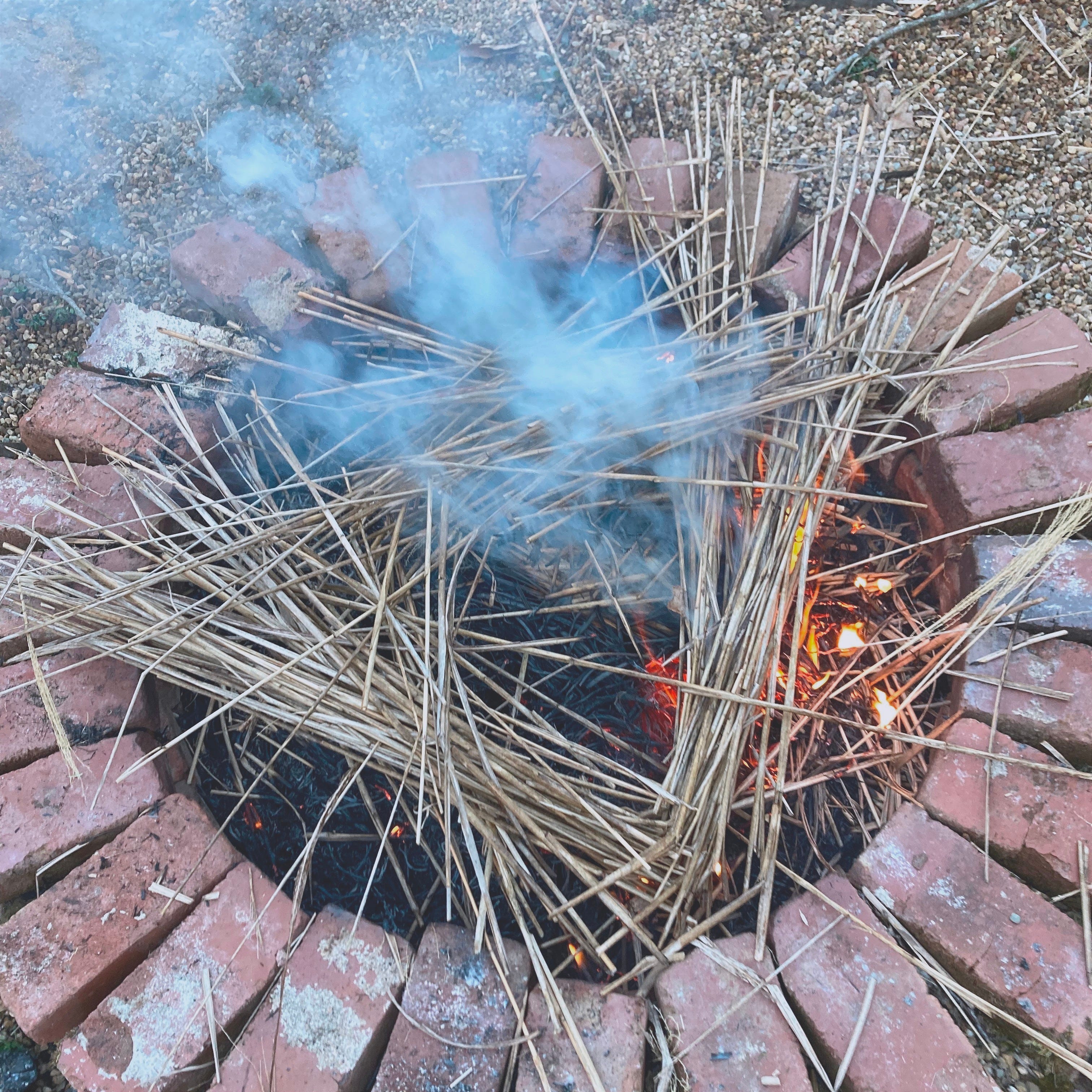
Standing over the fire pit, watching the Miscanthus I had gathered go up in flames, I wondered what it would become once it entered the process of ceramics.
When I arrived at Township 10, I came with a sense of uncertainty. My proposal was simple but open-ended: to work only with materials I could gather myself around the property—clay from the ground, ash from plants, minerals from nearby. I didn’t know what the clay would allow, or what the surfaces would become.
What I was looking for was a kind of material knowledge—a way of understanding the landscape through working with it directly. And I found that the materials would constantly defy my expectations and surprise me.
The clay I dug from the property let me know its limits early on—cracking under my hands, resisting certain forms, requiring constant compression and adjustment. On the wheel, it refused the shapes I was used to making. Plates collapsed, narrow necks tore. Working with it meant changing my approach, finding a compromise.
The glazes moved in their own direction as well—opening the kiln was always a encounter rather than confirmation. Ash from the furnace, blended with local clay and feldspar, melted into stony, iron-rich surfaces—matte, almost crystalline in places. The clay itself fired closer to brick than anything I had worked with before. Unprocessed clay revealed itself through cracking and variation, shrinking around small stones embedded in its body.
The glaze I made using ash from Miscanthus in particular held a tension between intention and discovery.
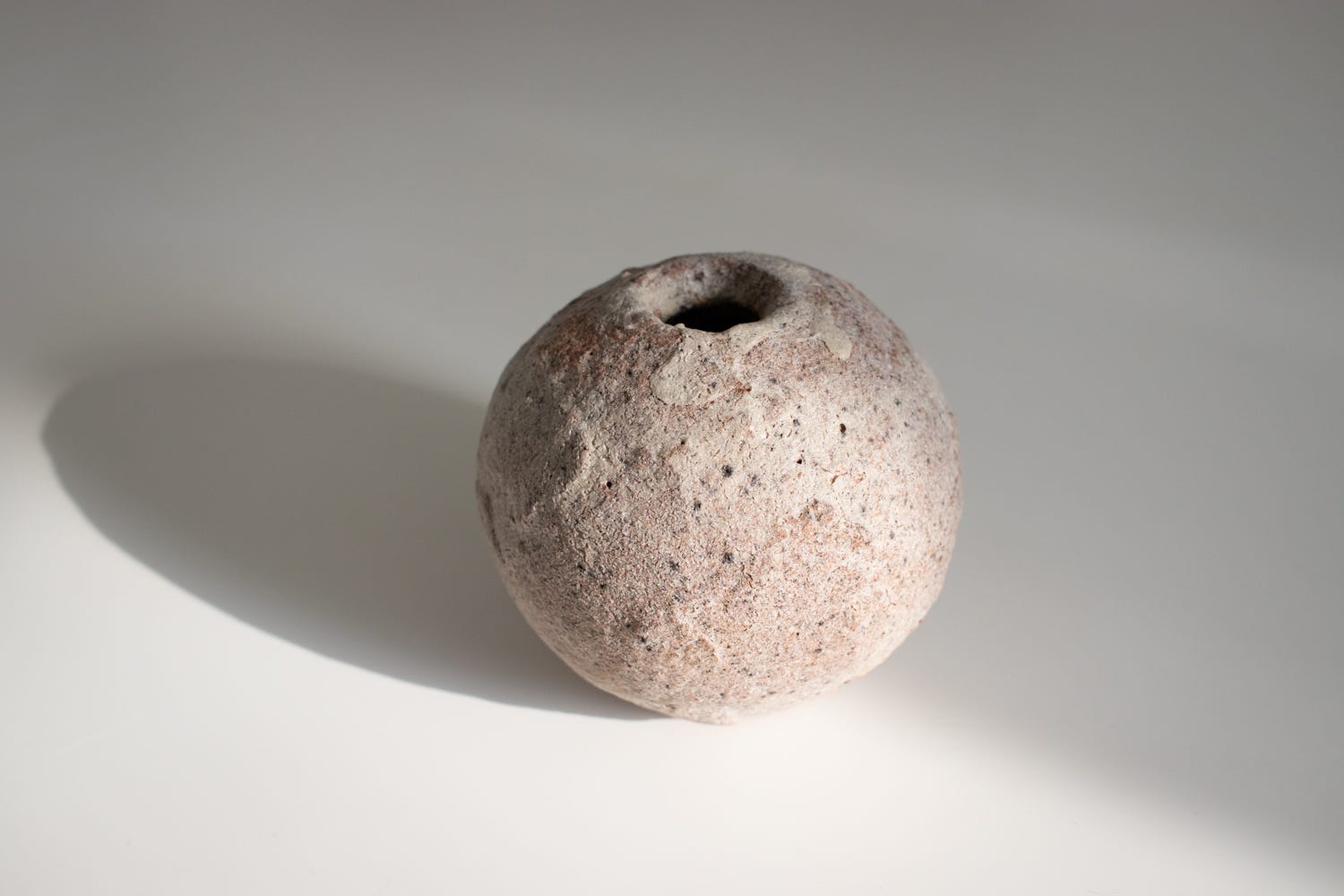
I began those tests hoping for something like a nuka glaze—a soft, pale, satin surface traditionally made using rice hull ash. My hope was that I could achieve a similar effect using ash from the invasive Miscanthus grass that grows so beautifully and prolifically throughout the county. What came out of the kiln during my testing was instead rocky, dry, almost pumice-like—more geological formation than traditional glaze.
I didn’t expect to like the failure, but I did.
The surface held onto the ashy character of the material. It refused to become something smooth and familiar. It felt less like failure and more like a statement: this material has the power to express itself in this way.
Narrowing the work to what was immediately available—what could be dug, burned, or gathered on site—began to feel less like a constraint and more like a structure. Historically, pottery has always been shaped by place: by the underlying clay, the minerals nearby, the fuel available. Working this way, even within a contemporary studio, brought that relationship back into focus and allowed me to feel a sense of belonging in a long human lineage of land-based craft.
Despite the variability and constant testing, the final kiln revealed a body of work with a clear visual language—a palette that felt specific and cohesive: dusky purples, terracotta, mottled grays, deep brick reds. In many ways, the surfaces echo the woodfired, reduction-cooled effects I’ve been after over the past few years—but achieved in an electric kiln, through entirely local materials.
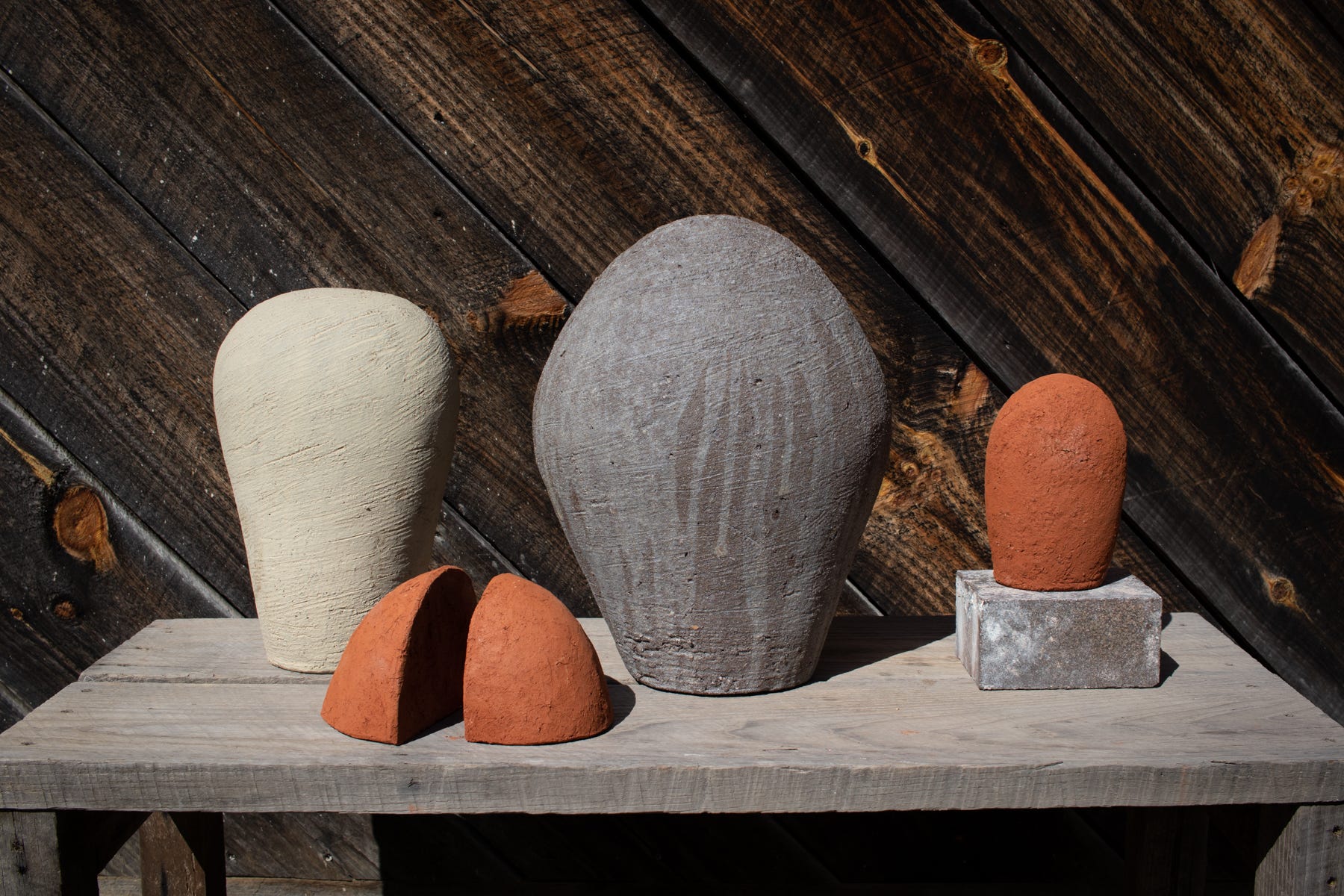
Looking at the finished pieces, I find myself tracing them back to the conditions that formed them—the shovel in the earth, the burning grass, the feeling of spring. Each piece carries those moments in its surface. Clay and ash become not just materials, but records—of place, transformation, and time.


Somewhere along the way, the work began to resemble something I already understood. I am a gardener, and I think of gardening as a form of tending—an ongoing relationship with soil, seasons, and the lives that move through a landscape. This process felt similar: less about control, more about attention and response.
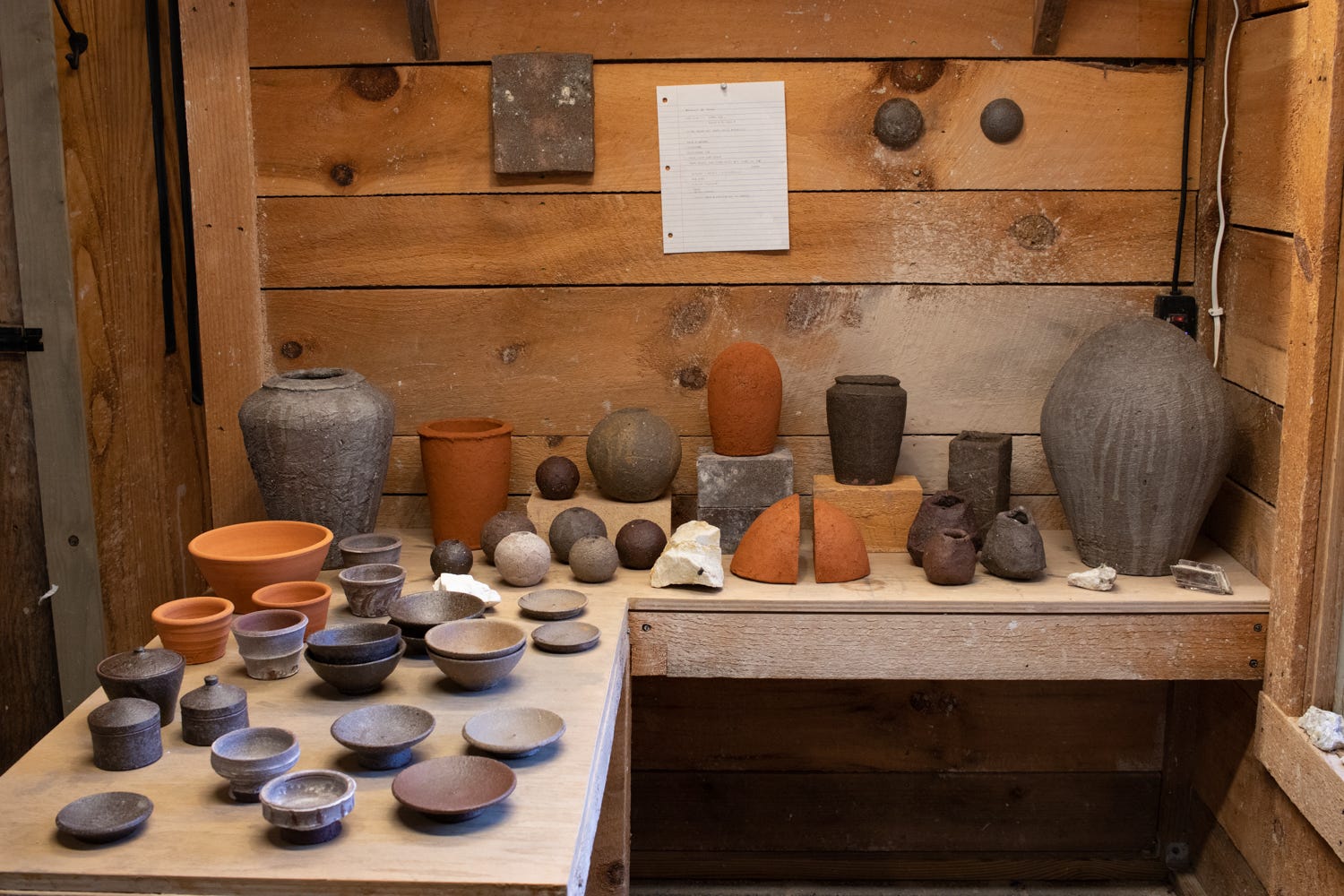
I’ve been wanting to make space for this body of work to exist as a whole before it disperses.
I’ll be sharing it as a small online sale on my website this Friday, April 3.
Subscribers will receive early access at 10am, with the sale opening to the public at 3pm.
EDIT: The sale is now live here:


All of the pieces were made from materials gathered during my residency at Township 10 in Marshall, NC. Because of that, this is a body of work shaped by a specific place and set of conditions—one that won’t be repeated in the same way. At the same time, it feels like the beginning of a direction I’m committed to continuing at my home studio in Burnsville.
* * * *
If you’re interested in working this way yourself, I’ll also be offering two in-person workshops at my home studio:
CLAY & PLACE: DIGGING, PROCESSING, AND MAKING WITH WILD CLAY
Saturday, May 2 · 1–4:30pm
A hands-on, outdoor workshop focused on digging, processing, and working with clay sourced directly from the local landscape.
ASH & EARTH: INTUITIVE GLAZE MAKING WITH NATURAL MATERIALS
Sunday, May 3 · 1–4:30pm
An experimental approach to glaze making using ash, clay, and local minerals, centered on observation and material response.
(Full details and registration information are linked.)
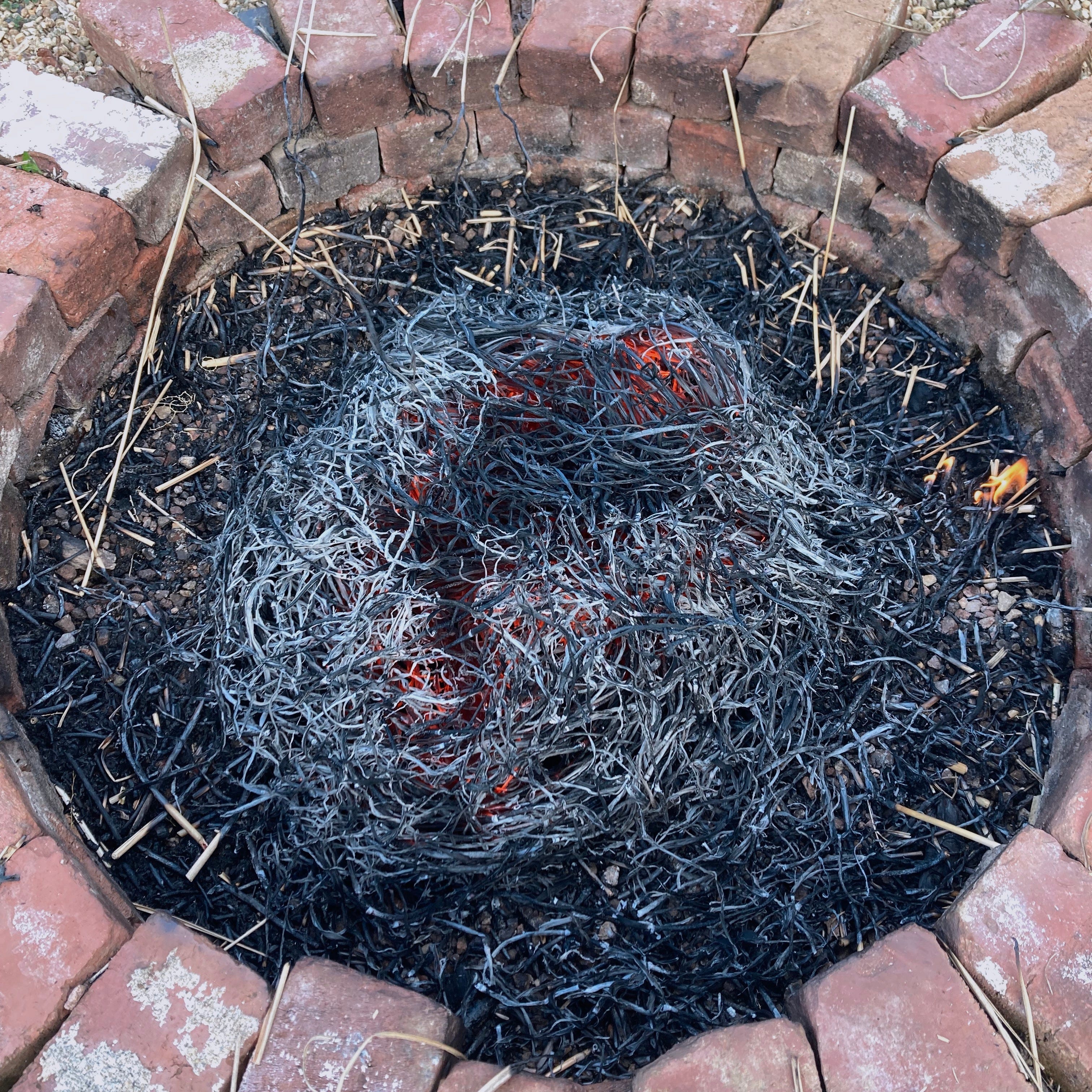
At the fire, watching the grass collapse into ash, I remember asking myself what it would become once it entered the process of ceramics. Not just what kind of glaze it would make, but what it might carry with it. The surfaces that emerged weren’t what I had set out to find. But looking at them now, it feels clear that the work was never really about arriving at a specific result— it was about following a material far enough to let it become itself.
And in that process, finding that what emerges—however unexpected—already holds the place it came from, and already belongs.
Thanks for reading. If you enjoyed this piece, please consider subscribing to my newsletter Groundwork.
-Mel
So good!!!!!